
How to Make a Cake with Fresh Cream

This guide explains how to make a fresh cream cake with better texture, including sponge selection, stabilised fresh cream, fruit filling, layering, decorating, warm weather handling and storage. It is written for home bakers who want a cake that tastes light but still slices cleanly.
A better fresh cream cake starts with balance
The best fresh cream cake has a light sponge, a cold whipped cream filling, controlled moisture from fruit or syrup, and enough chilling time before slicing.
Fresh cream cakes are popular because they feel lighter than buttercream cakes. They suit birthdays, family dinners, café style desserts and simple home baking. The problem is that fresh cream is softer than buttercream, so the cake needs a little more planning.
The main goal is not to make the cream as stiff as possible. Very stiff cream can become grainy and heavy. A better result comes from medium firm cream that spreads smoothly, holds the layers together and still tastes fresh.
This is also why fresh cream cake often fails in warm kitchens. If the cake is warm, the cream is loose, the fruit is wet or the layers are overfilled, the cake can slide, weep or collapse when sliced.
Think of a fresh cream cake as a structure problem: soft cake, soft cream and juicy fruit all need to work together without making the cake unstable.
Mr Nang kitchen guideChoose the right sponge for fresh cream
Fresh cream works best with a light but stable cake base such as vanilla sponge, chiffon cake, genoise or a soft butter cake that has cooled completely.
A fresh cream cake should not be too dense, but it also cannot be so fragile that it tears during layering. A classic sponge gives a light finish. Chiffon cake gives a soft Asian bakery style texture. A simple butter cake is easier for beginners because it is more forgiving when slicing and stacking.
Let the cake cool fully before assembling. Even a slightly warm sponge can soften the cream and make the layers slide.
Ingredients for a reliable fresh cream cake
For a reliable fresh cream cake, use cooled cake layers, cold whipping cream or thickened cream, icing sugar, vanilla and a filling that is flavourful but not too wet.
Base recipe for one 20cm cake
- Two cooled cake layers, preferably vanilla sponge, chiffon or light butter cake.
- 600ml cold thickened cream or whipping cream.
- 2 to 3 tablespoons icing sugar, adjusted to taste.
- 1 teaspoon vanilla extract or vanilla bean paste.
- 250g strawberries, berries, mango or another suitable fruit.
- Optional: 2 to 3 tablespoons jam, fruit curd or light syrup.
- Optional for stability: mascarpone, gelatine or another suitable stabiliser.
For beginners, the safest flavour combination is vanilla sponge, lightly sweetened cream and strawberries that have been washed, dried and sliced thinly. It gives enough flavour without making the cake too wet.
Make a cream filling that holds clean slices
A good whipped cream cake filling should be cold, smooth and thick enough to hold a layer, but not so over whipped that it becomes grainy.
For fresh cream cake, aim for medium firm peaks. The cream should hold a clear shape on a spoon but still look smooth and spreadable. If the cream looks rough, lumpy or slightly yellow, it may have gone too far.
Temperature matters. Cold cream whips better because the fat holds air more effectively. In a warm kitchen, chill the bowl, keep the cream in the fridge until needed and avoid leaving the finished cake out while you prepare decorations.
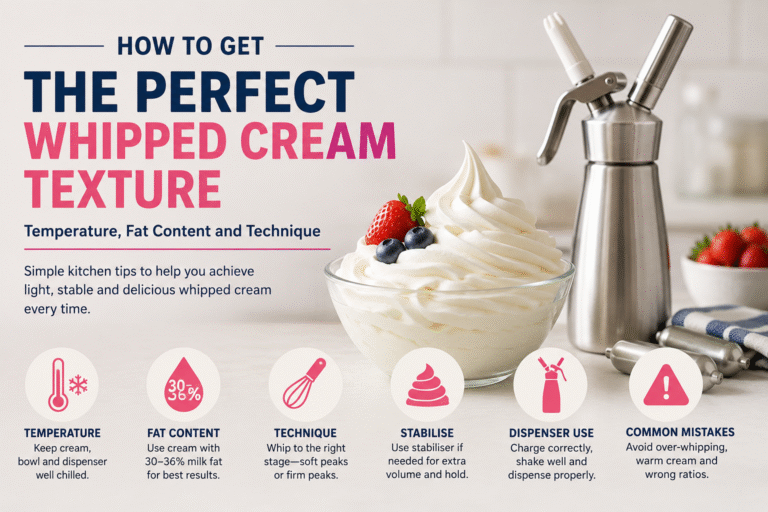
If your main problem is cream texture, read our perfect whipped cream texture guide. It explains soft peaks, medium peaks, firm peaks, cream temperature and common texture mistakes in more detail.
How to stabilise fresh cream for cake
Fresh cream can be stabilised with a small amount of mascarpone, gelatine, icing sugar or another recipe suitable thickener, depending on how firm you need the cake to be.
For a cake that will be eaten soon, simple whipped cream with icing sugar may be enough. For a birthday cake, summer cake, café style dessert or a cake that needs to travel, stabilised fresh cream is usually safer.
Mascarpone method
Add mascarpone to cold cream before whipping. This gives a creamier, slightly richer filling that holds shape better without tasting like heavy frosting.
Gelatine method
Bloom and dissolve gelatine, then add it carefully while whipping. This gives stronger structure, but it needs more precision to avoid lumps.
Icing sugar method
Icing sugar is the easiest option. It helps slightly with stability and blends more smoothly than coarse sugar.
Keep it simple
If the cake will be served the same day and kept cold, you may not need a strong stabiliser. Good technique may be enough.
For most home bakers, mascarpone is the easiest stabilising option because it improves structure without needing gelatine timing.
Step by step fresh cream cake method
The safest method is to cool the cake completely, prepare a stable cream, control the fruit moisture, assemble gently and chill before slicing.
Cool and level the cake
Make sure the cake layers are fully cool. Trim any domed tops if needed so the layers sit flat.
Prepare the fruit
Wash, dry and slice the fruit. Pat it dry with paper towel if needed. Wet fruit is one of the fastest ways to make a cream cake soggy.
Whip the cream
Whip cold cream with icing sugar and vanilla until it reaches medium firm peaks. Add mascarpone or another stabiliser if the cake needs extra hold.
Build a thin first layer
Place the first cake layer on a board. Spread a thin layer of cream, add fruit or jam, then add another light layer of cream to hold the filling.
Add the top layer gently
Place the second cake layer on top and press very lightly. Do not push hard or the cream may squeeze out.
Coat, decorate and chill
Cover the top and sides with cream if desired, decorate simply, then chill for at least one hour before slicing.
Can you use a whipped cream dispenser for cake?
A whipped cream dispenser can be useful for smooth topping, piping and quick decoration, but hand whipped cream may give better control for thick cake layers.
A dispenser works best when the cream mixture is smooth, cold and free from fruit pieces or lumps. It can be useful for decorating the outside of the cake, adding a neat cream finish or preparing cream quickly for serving.
For thick internal layers, many bakers still prefer a bowl and whisk because it is easier to judge the texture. If you use a dispenser, do not overfill it, do not add chunky fruit and make sure the mixture is strained if needed.
For a practical setup guide, read our whipped cream dispenser method.
Fresh cream cake flavour ideas
The best fresh cream cake flavours are light, balanced and not too wet. Fruit, jam, chocolate, coffee and matcha all work well when the filling is controlled.
How to stop a fresh cream cake melting
To stop a fresh cream cake melting, keep everything cold, stabilise the cream if needed, avoid wet fillings and keep the finished cake refrigerated until serving.
This matters in Australian kitchens because warm rooms, summer birthdays and transport time can soften fresh cream quickly. If the cake needs to sit out for a while, use a more stable cream filling and keep the decoration simple.
Common fresh cream cake problems
Most fresh cream cake problems come from warm sponge, loose cream, wet fruit, overfilled layers or not chilling the cake before slicing.
Layers sliding
This usually happens when the cream is too soft, the fruit is too wet or the cake has not chilled long enough.
Use medium firm cream, dry the fruit and chill the cake before slicing.If your cream is already too soft, our runny whipped cream troubleshooting guide explains how to chill, rewhip and judge whether the cream can still be saved.
Make ahead, storage and serving
Fresh cream cake is usually best served the same day, but a well chilled and properly stabilised cake can often be prepared ahead for the next day.
Keep the cake covered in the fridge until serving. Avoid strong smelling foods nearby because cream can absorb fridge odours. If the cake has fresh fruit, expect the fruit to soften over time.
For the cleanest slices, chill the cake first, use a sharp knife and wipe the blade between cuts. If the cake is for a party, bring it out close to serving time rather than leaving it on the table for too long.
Fresh cream cake is not designed to behave like buttercream cake. It is lighter, softer and better when handled cold.
Useful guides before your next cake
This page explains how to build a fresh cream cake. If you need help with cream texture, dispenser technique or basic product understanding, the guides below are more specific.
Make your next fresh cream cake easier to finish
Start with cold cream, choose a stable filling, control moisture and use the right preparation method for your dessert.
Read More Kitchen Guides View Cream Charger Options