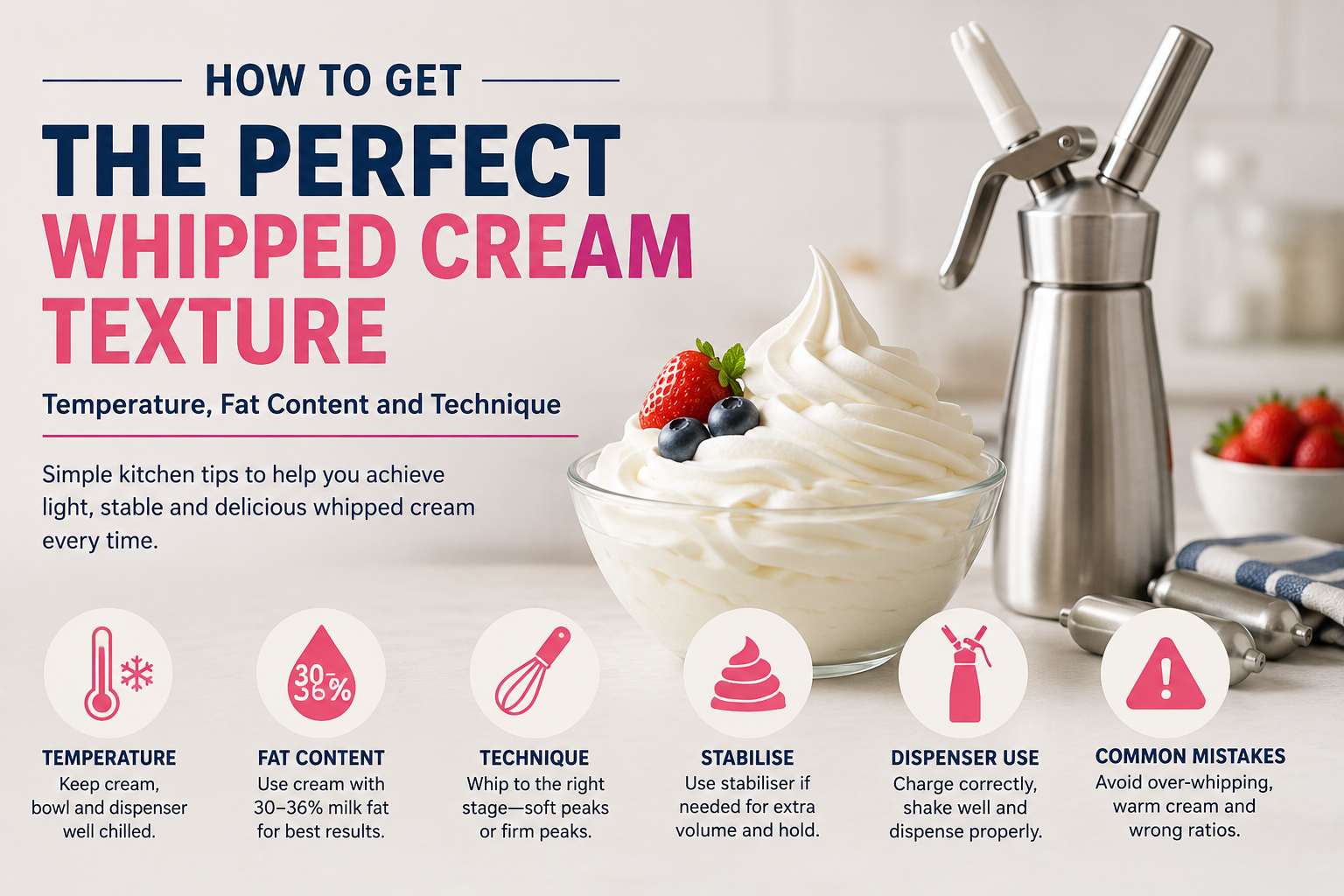
How to Get the Perfect Whipped Cream Texture: Temperature, Fat Content and Technique

This guide explains the practical kitchen factors that affect whipped cream texture, including cream temperature, fat content, soft peaks, firm peaks, sweetener timing, stabilising and whipped cream dispenser technique.
What makes whipped cream texture perfect?
Perfect whipped cream texture is light, smooth and stable enough to hold its shape without becoming grainy, watery or overly stiff.
For cakes and dessert toppings, the ideal texture depends on what you are making. A soft, spoonable cream works well for fresh fruit and pancakes. A firmer texture is better for piping, layered cakes and dessert presentation.
The main controls are cream temperature, milk fat level, mixing time and whether the cream is being whipped by hand, mixer or dispenser. If one of those is off, the final texture can turn soft, runny, grainy or split.
Good whipped cream starts before whipping. Cold cream, the right fat content and clean equipment do most of the work.
Mr Nang kitchen guideWhy cold cream matters
Cold cream whips better because chilled fat holds air more effectively, giving whipped cream better volume, body and stability.
Warm cream is one of the most common reasons whipped cream turns loose or fails to hold shape. If the cream, bowl or dispenser is too warm, the mixture may stay thin even after extra shaking or mixing.
For better results, chill the cream before use. If you are using a bowl and whisk, chilling the bowl can help. If you are using a whipped cream dispenser, keep the cream cold before filling and allow the filled dispenser to chill when the recipe allows.
Simple rule: if the cream feels warm or has been sitting out too long, chill it before trying to whip or dispense it.
Choose cream with enough fat content
Cream with enough milk fat usually whips more reliably and holds a better texture than low fat cream or thin pouring cream.
For most kitchen uses, thickened cream or whipping cream with a higher fat percentage is easier to work with. Low fat cream may taste fine, but it often struggles to trap air and hold structure.
If your whipped cream keeps turning runny, check the label before blaming the dispenser or charger. The cream itself may not have enough fat to create a stable texture.
Soft peaks, medium peaks and firm peaks
The right whipped cream texture depends on whether you need soft peaks, medium peaks or firm peaks for your recipe.
Soft peaks are light and relaxed. They are useful for spooning over fruit, pancakes or warm desserts. Medium peaks hold a little more shape and work well for layering. Firm peaks are better for piping and presentation, but they can quickly become over whipped if you keep mixing.
Soft peaks
Soft peaks gently fold over when lifted. This texture is good for spooning over fruit, pancakes and simple desserts.
Best for a light, relaxed finish.If you are preparing cream for cake layers or toppings, read our guide on how to make a cake with fresh cream.
Add sweetener at the right time
Sweetener should be added in a way that blends smoothly without weighing down the cream or creating a gritty texture.
Icing sugar usually blends more smoothly than coarse sugar. If you are adding vanilla, syrup or other flavouring, keep the amount controlled. Too much liquid can soften the cream and make it harder to hold shape.
If you are making cream for piping or a dessert that needs to sit for a while, you may need a stabiliser. This could be a small amount of icing sugar, gelatine, mascarpone or another recipe appropriate stabilising method.
For best results, keep flavouring simple. A little sweetness is fine, but too much added liquid can make the cream loose.
Using a whipped cream dispenser for better texture
A whipped cream dispenser can create smooth, even whipped cream when the cream is cold, the dispenser is not overfilled and the charger is used correctly.
Dispenser texture depends on preparation. The cream mixture should be smooth before it goes into the dispenser. Thick lumps, seeds or poorly dissolved ingredients can block the nozzle or affect the final result.
Avoid overfilling the dispenser. Leave enough space for gas to mix properly with the cream. After charging, shake according to your dispenser instructions. Too little shaking may give a soft result. Too much shaking can push the texture too far.
Chill the cream
Start with cold cream and keep the filled dispenser chilled when the recipe allows.
Strain if needed
Use a smooth mixture. Strain out lumps or solids that could block the nozzle.
Do not overfill
Leave enough room inside the dispenser for proper aeration.
Shake with control
Follow the dispenser instructions. Adjust carefully rather than guessing.
For a more detailed method, read our whipped cream dispenser guide.
If you are unsure which product format suits your dispenser, read our cream charger buying guide.
Common mistakes that ruin whipped cream texture
Most whipped cream texture problems come from warm cream, low fat cream, over whipping, under whipping, overfilling the dispenser or using a mixture that is too thin.
Quick texture check before you start
Before whipping or dispensing, check the cream temperature, fat content, equipment and texture goal.
Tick your setup
Can you fix whipped cream after it goes wrong?
Sometimes runny whipped cream can be improved by chilling, gentle rewhipping or adjusting the mixture, but split or badly over whipped cream may need to be restarted.
If the cream is simply too soft, chill it first. Then gently continue whipping or shaking in small steps. If the cream has started to look grainy, greasy or separated, it may have gone too far.
For a full troubleshooting guide, read our how to fix runny whipped cream guide.
Where to read next
This page explains texture. If you need method, troubleshooting, cake preparation or product guidance, use the guide that matches your next question.
Explore more practical kitchen guides in the Mr Nang Guides library.
Better texture starts with the right setup
Choose suitable cream, keep it cold, use compatible equipment and follow the right preparation method for your dessert.
View Cream Charger Options View Current Service Details Read More Guides