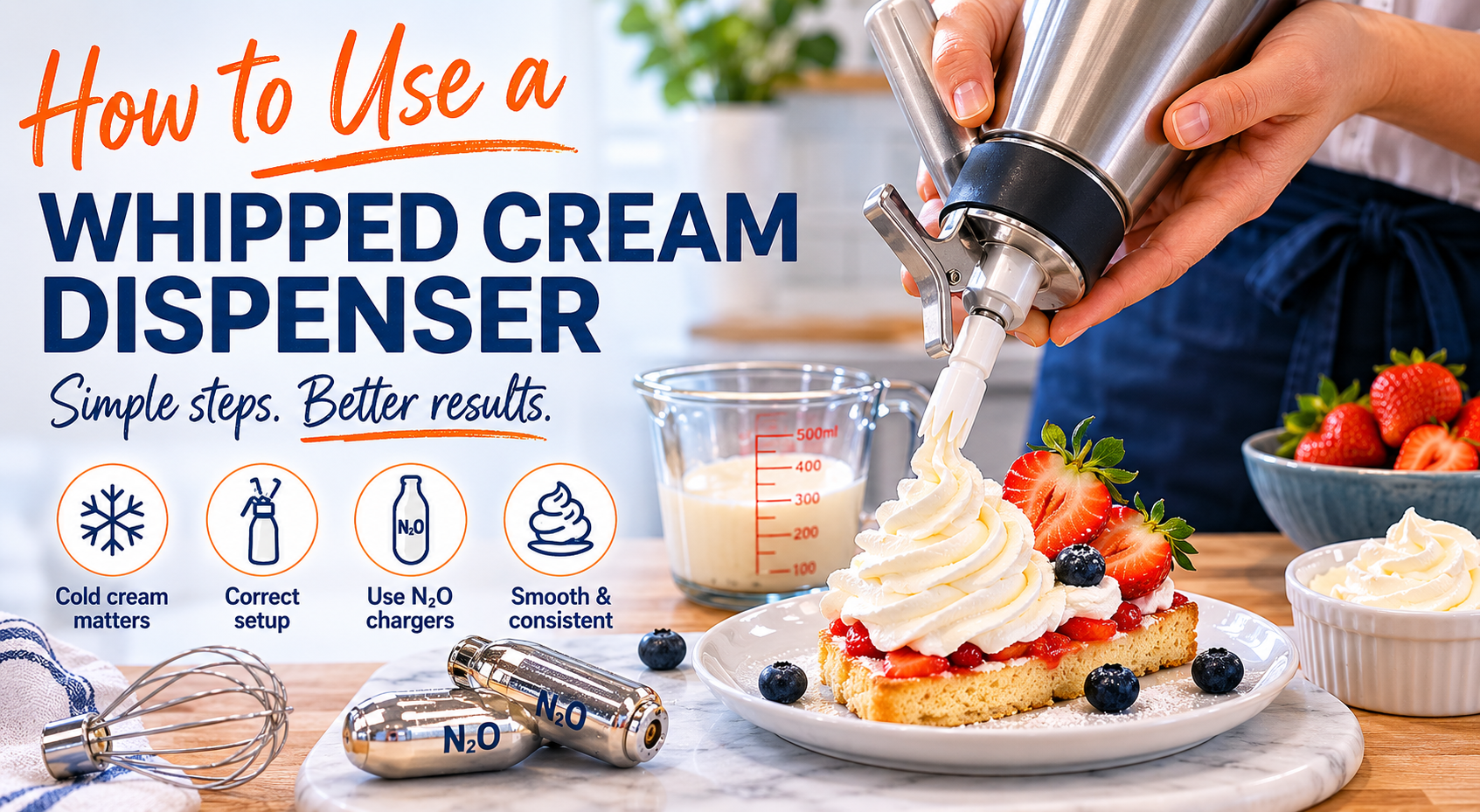

How to Use a Whipped Cream Dispenser Without Wasting Cream
Most people do not ruin a batch of cream because the charger is bad. It is usually because the cream was too warm, the bottle was overfilled, the seal was not sitting properly, or the nozzle had a small blockage.
This guide is written from the practical side of the job. It is for home bakers, café staff and anyone preparing fresh cream for cakes, coffees, pancakes, waffles or dessert service.
Why whipped cream fails in a dispenser
When a customer says the cream came out runny, the first thing to check is not the charger brand. It is usually the cream temperature, fill level, gasket, nozzle and shaking.
A dispenser needs space for the gas to move through the cream. If the bottle is filled past the line, if the cream is too warm, or if the nozzle has small bits of cocoa, sugar or fruit pulp inside it, the result can look like a charger issue when the setup was the real problem.
Cold cream, a clean nozzle, the gasket in place and a few controlled shakes will fix more problems than changing brands.
Where a dispenser actually earns its place
A whipped cream dispenser is not just a gadget for neat piping. In a real kitchen, it saves time when you need cream to be ready without whipping a bowl every time someone orders dessert or coffee.
Birthday cake at home
You have the sponge cooled, fruit sliced and people arriving soon. The dispenser lets you pipe cream quickly without starting the mixer again.
Hot chocolate and iced coffee
For drinks, a dispenser gives a tidy topping and keeps service moving when the counter is busy.
Pancakes, waffles and pavlova
Cold cream in a clean dispenser makes dessert prep easier when you are serving more than one plate at a time.
Before you start, check the basics
Most dispenser issues start before the charger is even used. A quick check saves cream, time and frustration.
What you want
Cold thickened or heavy cream, a clean dispenser, the gasket in place, a smooth mixture and a compatible N2O cream charger.
What causes trouble
Warm cream, overfilling, missing seals, lumpy cocoa, fruit pulp, coarse sugar, or using gas that is not intended for whipped cream.
N2O is the normal choice for whipped cream dispensers. CO2 is generally used for carbonated drinks, which is why the two gases are not interchangeable for this job. You can read more in our N2O vs CO2 guide.
The method we recommend
This is the practical order we recommend. Always follow the instructions for your own dispenser as well, because different models can vary slightly.
Start with cold cream
Use cream straight from the fridge. If your kitchen is warm, chilling the canister for a short time can help.
Mix before filling
Combine cream, icing sugar and vanilla in a jug first. Taste it before it goes into the bottle, because adjusting flavour is harder after charging.
Strain if needed
If you use cocoa, coffee powder, fruit, spices or anything with small particles, strain the mixture. A smooth mix protects the nozzle.
Fill below the line
Do not go past the maximum fill line. The gas needs room to move through the cream and create volume.
Charge the dispenser
Fit the head evenly, place the charger into the holder, then screw it in until you hear the gas release. Do not force the thread.
Shake, test and serve
Shake a few times, turn the dispenser upside down and test into a bowl. If it is still soft, add one or two more shakes and test again.
Getting the texture right
The goal is not only to get cream out of the nozzle. You want cream that looks smooth, holds on a cake or drink, and does not collapse after a few minutes.
Cold cream with enough fat gives better structure. A low fat or warm mix may look fine for a moment and then turn loose. Over shaking can go the other way and make the texture thick, clumpy or buttery.
| What you see | What it usually means | What to do next |
|---|---|---|
| Soft and runny cream | Cream is warm, too low in fat, or under shaken | Chill it, use suitable cream, and shake once or twice more. |
| Clumpy or buttery texture | Over shaken or mixture too thick | Use fewer shakes next time and keep the recipe simple. |
| Nothing comes out | Nozzle blockage, missing pressure, or incorrect assembly | Release pressure safely, clean the nozzle, and check the gasket. |
| Gas leaks around the head | Loose head, damaged seal, or gasket not seated properly | Stop and check the seal before using another charger. |
If your whipped cream keeps coming out runny, read our dedicated guide on how to fix runny whipped cream.
Cleaning matters more than people think
Old cream inside the nozzle or head is one of the easiest ways to ruin the next batch. After use, release pressure according to your dispenser instructions before opening the bottle.
Rinse the canister, head, gasket and nozzle with warm water. Use a small brush around the nozzle and valve area. Let everything dry before putting the dispenser away.
If you store prepared cream in the dispenser, keep it refrigerated and follow both the cream supplier and dispenser manufacturer’s instructions.
What should you make with it?
Keep it simple at first. Vanilla cream, chocolate cream and lightly sweetened cream for cakes are good starting points. Once you know how your dispenser behaves, you can move into thicker dessert toppings or light savoury foams where the recipe suits a dispenser.
- Fresh cream for sponge cakes, pavlova and fruit desserts
- Vanilla cream for hot chocolate or iced coffee
- Chocolate cream for waffles, pancakes and sundaes
- Light dessert toppings for catering prep
- Simple savoury foams for suitable kitchen recipes
For baking ideas, see our guide on making a cake with fresh cream.
Cartridges or tanks for regular use?
For occasional home baking, small cartridges are often enough. For frequent prep, a larger tank or combo pack can be more practical because you are not changing cartridges as often.
The right choice depends on how often you prepare cream, how many serves you need, and whether you are using the dispenser at home, in a café, or for catering prep.
Read our comparison guide on N2O tanks vs cartridges if you are unsure which format suits your kitchen use.
Responsible use and disposal
Cream chargers supplied by Mr Nang are intended for baking, whipped cream, beverage toppings, dessert preparation and lawful culinary preparation only.
Used cream chargers and metal gas cartridges should not be thrown away randomly or left in public areas. Take used items to a suitable recycling or waste facility that can accept metal gas cartridges. Local council and waste facility rules may vary.
For more information, read our cream charger recycling guide.
Related Mr Nang guides
If you are working with a dispenser, these guides are the most useful next reads.
Quick FAQ
Can I use CO2 instead of N2O?
For normal whipped cream, no. CO2 is generally used for carbonated drinks. N2O is the usual choice for whipped cream dispensers.
How many times should I shake the dispenser?
Start with a few firm shakes, then test. If the cream is still soft, add one or two more shakes. Over shaking can make the cream too thick.
Why is my dispenser leaking gas?
Check whether the head is screwed on evenly, the gasket is seated properly, and the seal is not damaged.
Where should I check current ordering information?
For current product options, service details and ordering information, visit Mr Nang before placing an order.
Need cream chargers for kitchen prep?
Choose the product size that suits your kitchen use, review current service details and complete checkout online.
Shop cream chargers